Year

Type

Contagious Dissent: Radical Right Spillover and Anti-Vaccine Mobilization. Insights from the Italian Case

Research article by Manuela Caiani and Nikolaos Saridakis

Despite growing scholarly attention to radical right responses to the Covid-19 pandemic, we still know relatively little about how radical right actors interacted with and influenced the broader anti-vaccination and anti-Green Pass movement. This article addresses this gap by examining the relationship between radical right actors and the wider protest arena in Italy, a critical case of anti-restriction mobilization in Europe. Building on a social movement perspective, we conceptualize the radical right as a heterogeneous field of interconnected collective and individual actors operating across the boundaries between institutional and contentious politics. Drawing on a mixed-methods design that combines a protest event analysis (PEA) of 157 protest events reported in the Italian press (2021–2022) with 23semi-structured interviews with activists, movement leaders, and experts, we analyzehow radical right actors mobilized, interacted with other protest actors, and adapted their strategies throughout the protest cycle. The findings show that the pandemic created new opportunities for organizational and discursive spillover between the radical right and the broader anti-vaccination movement. Radical right actors contributed to shaping protest frames, became increasingly embedded in protest networks, and diversified their repertoires of contention through a functional division of laborbetween more confrontational and more conventional actors. At the same time, these interactions were contingent on local political contexts and generated both opportunities for cooperation and constraints on radical right mobilization. More broadly, the pandemic functioned as a critical juncture that expanded the radical right's ideological repertoire beyond its traditional focus on nationalism, immigration, and ethnicity to include public health governance, scientific authority, and epistemic distrust.

Related categories: Journal Articles  

Global Far-Right Ecologies: Trends, Issues and Responses

Edited Book by Lise Benoist, George Edwards, Bernhard Forchtner, Balsa Lubarda, Sonja Piettilainen and Kjell Vowles

This book explores far-right authoritarian and exclusionary interpretations of environmental crises that are gaining traction globally. 

While research on the political ecology of the far right has grown substantially over the last decade, it has largely focused on ‘Western’, especially European, actors and contexts. As far-right ideas increasingly circulate worldwide, there is an urgent need to ‘provincialize Europe’ and approach current developments from a global perspective. This volume shows how environmental governance and conservation are being mobilised by right-wing, nationalist and authoritarian forces worldwide as tools for exclusion, territorial control and the reproduction of colonial hierarchies. Drawing on case studies spanning Africa, the Americas, Asia, Australia and Europe, this volume identifies salient issues and trends shapingreactionary environmental politics. The book also spotlights activists and grassroots organisations responding to these challenges, bringing diverse voices into this vital conversation. 

This volume will appeal to researchers of the far right, political ecology and environmental politics, as well as activists and organisers involved in environmental justice.

Related categories: Books  

Fighting for an Equal Place: Legal Mobilization in a City—and Democracy—Under Siege

Research article by Scott Cummings

I wrote An Equal Place: Lawyers in the Struggle for Los Angeles to examine how contemporary movement lawyers built new legal regimes from the ground up to challenge economic inequality and promote immigrant worker power in America’s second-largest city. I did much of the research for the book—which included interviewing sixty-six key actors, building an archive of movement documents, and compiling detailed court and legislative records—during the Obama years, when Los Angeles was at the center of a wider resurgence of progressive social movement activism and innovative thinking about how to revitalize the labor movement after decades of retrogression. I did much of the final writing during a darker period: the unexpected first term of President Donald Trump, when writing felt like an act of resistance and the country seemed like it could still thwart twin infestations: Covid and the pestilence of Trumpism. I published the book as the Trump effort to overturn the 2020 election had just failed, and the nation walked back from a dangerous precipice.

Related categories: Journal Articles  
9788807991127_0_0_424_0_75

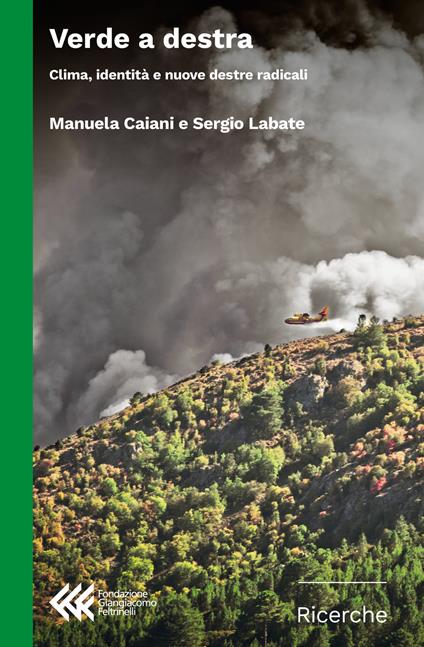
Verde a destra. Clima, identità e nuove destre radicali

Book by Manuela Caiani and Sergio Labate

In un dialogo tra scienza politica e filosofia, il libro non annuncia una tesi ma la costruisce passo dopo passo, restituendo destre più organizzate, più transnazionali e più insidiose. E lascia aperta una domanda che le riguarda tutte: a chi appartiene, oggi, la contesa sul futuro?
L’ecologia è ancora una battaglia della sinistra? Non è più così scontato. Se è vero che per anni le destre radicali hanno guardato con diffidenza e scetticismo alla questione climatica, è altrettanto vero che oggi vi si accostano sempre più, riformulandola con le proprie categorie: la difesa dell’ambiente che si salda alla difesa della nazione, la transizione ecologica letta come imposizione delle élite, il clima che entra nel conflitto tra “popolo” ed establishment. Anche attraverso i risultati di una ricerca condotta in sette paesi europei, Manuela Caiani e Sergio Labate mettono a fuoco un fenomeno più vasto: la trasformazione ideologica e organizzativa delle destre radicali contemporanee, di cui l’ambiente è oggi il banco di prova più rivelatore.

Related categories: Books